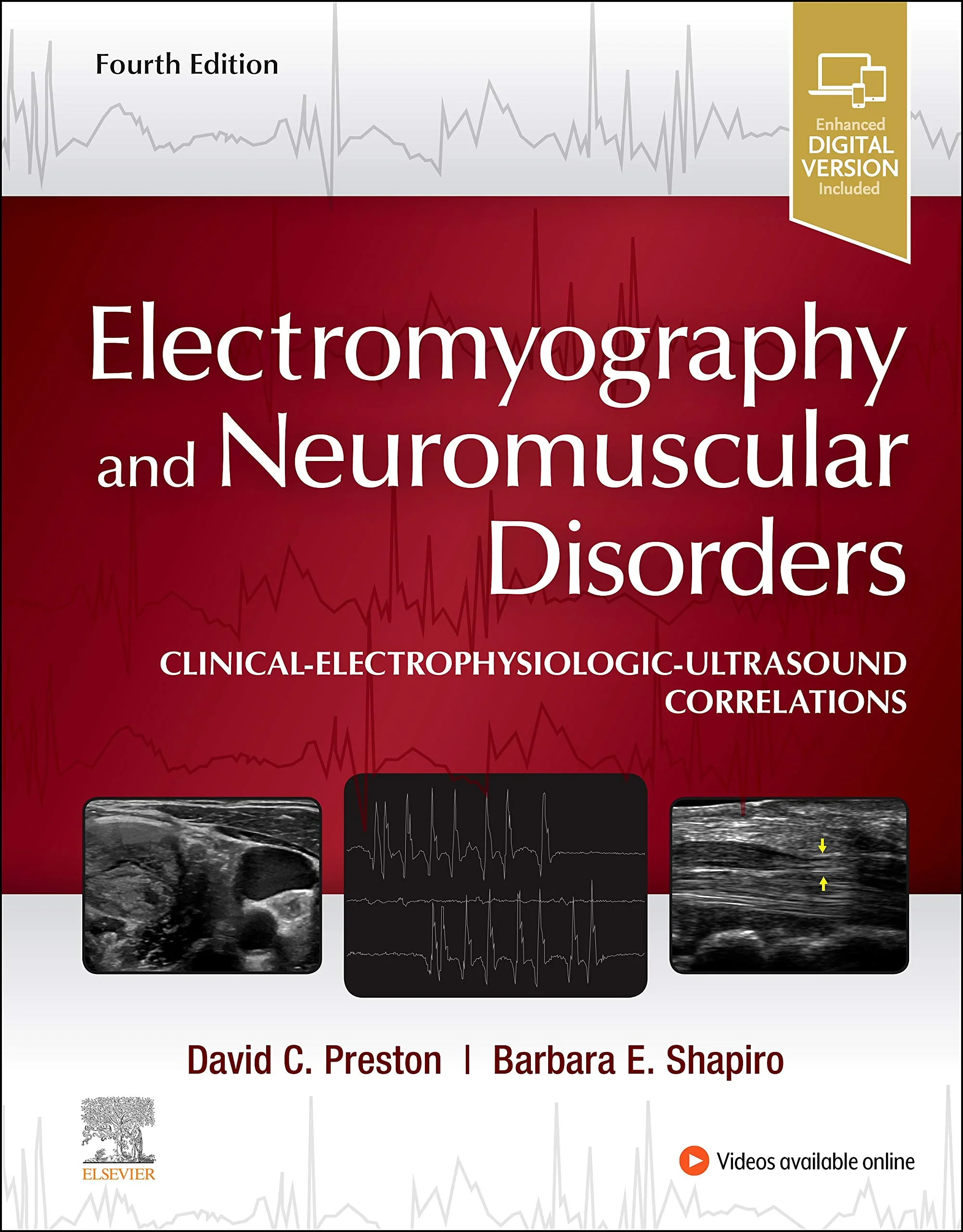
| Section I: Overview of Nerve Conduction Studies and Electromyography Chapter-1: Approach to Nerve Conduction Studies and Electromyography Chapter-2: Anatomy and Neurophysiology Section II: Fundamentals of Nerve Conduction Studies Chapter-3: Basic Nerve Conduction Studies Chapter-4: Late Responses Chapter-5: Blink Reflex Chapter-6: Repetitive Nerve Stimulation Section III: Sources of Error: Anomalies, Artifacts, Technical Factors and Statistics Chapter-7: Anomalous Innervations Chapter-8: Artifacts and Technical Factors Chapter-9: Basic Statistics for Electrodiagnostic Studies Section IV: Detailed Nerve Conduction Studies Chapter-10: Routine Upper Extremity, Facial, and Phrenic Nerve Conduction Techniques Chapter-11: Routine Lower Extremity Nerve Conduction Techniques Section V: Fundamentals of Electromyography Chapter-12: Basic Overview of Electromyography Chapter-13: Anatomy for Needle Electromyography Chapter-14: Basic Electromyography: Analysis of Spontaneous Activity Chapter-15: Basic Electromyography: Analysis of Motor Unit Action Potentials Section VI: Clinical-Electrophysiologic Correlations Part I: Common Mononeuropathies: Chapter-16: Clinical-Electrophysiologic Correlations: Overview and Common Patterns Chapter-17: Median Neuropathy at the Wrist Chapter-18: Proximal Median Neuropathy Chapter-19: Ulnar Neuropathy at the Elbow Chapter-20: Ulnar Neuropathy at the Wrist Chapter-21: Radial Neuropathy Chapter-22: Peroneal Neuropathy Chapter-23: Femoral Neuropathy Chapter-24: Tarsal Tunnel Syndrome Chapter-25: Facial and Trigeminal Neuropathy Part II: Polyneuropathy Chapter-26: Polyneuropathy Part III: Motor Neuron Disease Chapter-27: Amyotrophic Lateral Sclerosis and Its Variants Chapter-28: Atypical Motor Neuron Disorders Part IV: Radiculopathy, Plexopathies, and Proximal Neuropathies Chapter-29: Radiculopathy Chapter-30: Brachial Plexopathy Chapter-31: Proximal Neuropathies of the Shoulder and Arm Chapter-32: Lumbosacral Plexopathy Chapter-33: Sciatic Neuropathy Part V: Disorders of Neuromuscular Junction and Muscle Chapter-34: Neuromuscular Junction Disorders Chapter-35: Myopathy Chapter-36: Myotonic Muscle Disorders and Periodic Paralysis Syndromes Section VII: Electromyography in Special Clinical Settings Chapter-37: Approach to Electrodiagnostic Studies in the Intensive Care Unit Chapter-38: Approach to Pediatric Electromyography Section VIII: Electronics and Instrumentation Chapter-39: Basics of Electricity and Electronics for Electrodiagnostic Studies Chapter-40: Electrical Safety and Iatrogenic Complications of Electrodiagnostic Studies | 













Recenzii
Nicio recenzie găsită.