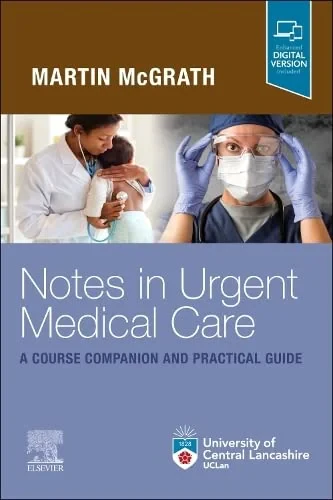
| CONTENTS
Acknowledgements
Symbols and abbreviations
Useful reference material
Foreword PART I – MANAGEMENT
Chapter 1 - Working in Urgent Medical Care Systems
The development of urgent care systems - a brief history
The development of urgent care systems - challenges
The development of urgent care systems - evolving solutions
Alternative urgent care models
The evolution of urgent care workforces
Patient choice and behaviour
UUC operational environments
NHS 111 services
GP out of hours services
Working in multi-disciplinary teams
999 call handling and dispatch
The characteristics of good and bad urgent care services
Working effectively with acute and urgent care services
Providing support to urgent care staff
Supporting workers after traumatic events Chapter 2 – Using Technology in Urgent Medical Care
Definitions and meanings
Drivers for change - overview
Drivers for change - system
Drivers for change - individual
Future technology
Relevance of health technology in UUC settings
Urgent Treatment Centres
Example near-patient investigations
Use of PPE
Indwelling catheters
Hand decontamination
Remote care and monitoring
Telemedicine Chapter 3 – Managing Safe Dispositions
Role and responsibilities of the referring clinician
De-escalating situations
Factors influencing referral decisions
Factors influencing risk-based decision-making
Decision-making and referral in remote consultation
Remote consultations - safeguarding considerations
Supportive care and avoiding admissions
Compulsory mental health admission
The Mental Capacity Act (MCA) 2005
Assessment of capacity
Deprivation of liberty safeguards (DoLS)
Child safeguarding
Adult safeguarding
Raising concerns
Whistle blowing
Prevent/Channel
Domestic violence and abuse
Human trafficking
Modern slavery
Female genital mutilation
Patient transfer and transport
Role of clinicians in transfers
The ambulance response programme Chapter 4 – Risk Management and Urgent Care Preparedness
Hazard and risk
Risk management and system design in the context of urgent care
Learning from significant event analysis (SEA) and serious untoward incidents (SUIs)
Principles of emergency preparedness, response and recovery
The role of urgent care services in relation to a major incident
Management of major incident situations
The psychological needs of those involved in a major incident
Business continuity relevant to urgent care services Chapter 5 – Human Factors
Human factors in healthcare and patient safety
The swiss cheese model
The SHEEP model
The WHO surgical safety checklist
Crew resource management
Cognitive bias
Decision-making in urgent care
Communication within and between teams
Teamworking
Leadership
Bad leadership
Managing fatigue and stress
Error investigation and management
Root cause analysis Chapter 6 – Operational Performance
Local and national operational guidance
Settings for patient care
Urgent Treatment Centres
Professional roles in urgent care
Communication in healthcare settings
Consultation models
Monitoring the delivery of patient care
Targets
Applying principles of equality and diversity PART II - CLINICAL
Chapter 7 – Providing Urgent Medical Care
Emergency and Time-Critical Conditions
Anaphylaxis
Cardiac arrest
Choking
Meningitis
Sepsis
Status epilepticus
Unconsciousness Dealing with Symptoms
2WW considerations
Acute abdominal pain
Chest pain
Collapse / syncope
Haemoptysis
Hyperventilation Breast
2WW considerations
Breast lump
Mastitis END OF LIFE CARE
General principles
Care of the dying
Emergencies – catastrophic haemorrhage
Emergencies – cauda equina compression lumbar spine below L1
Emergencies – hypercalcaemia
Emergencies – metastatic spinal cord compression (MSCC)
Emergencies – neutropenic sepsis
Emergencies – superior vena cava obstruction (SVCO)
Symptom management – anorexia
Symptom management – anxiety
Symptom management – breathlessness
Symptom management – constipation
Symptom management – cough
Symptom management – delirium & confusion
Symptom management – diarrhoea
Symptom management – fatigue
Symptom management – gastrointestinal obstruction
Symptom management – hiccups
Symptom management – insomnia
Symptom management – nausea & vomiting
Symptom Management – oral health
Symptom management – pain
Symptom management – respiratory secretions Cardiology
Angina
Acute coronary syndromes - unstable angina / NSTEMI
Acute coronary syndromes - STEMI
Aortic dissection
Brady and tachy-arrythmias
Electrical Injury
Left ventricular failure / pulmonary oedema
Pericarditis
Uncontrolled atrial fibrillation
Uncontrolled hypertension Dental
Acute dental and gum infection Dermatology
Abscess
Cellulitis Ear Nose and Throat
Bell’s palsy
Loss of hearing
Otitis externa
Otitis media
Sinusitis
TMJ dysfunction
Tonsillitis
Vertigo Endocrine, Haematology & Metabolic
2WW considerations
Addisonian crisis
Hyperglycaemic crisis / diabetic ketoacidosis
Hypoglycaemia
Hyperkalaemia
Hypokalaemia
Hypernatraemia
Hyponatraemia
Thyrotoxic crisis Gastroenterology and General Surgery
2WW considerations
Acute appendicitis
Acute cholecystitis
Acute pancreatitis
Anal pain
Constipation
Diverticulitis
Gastroenteritis
Gastrointestinal bleed - lower
Gastrointestinal bleed - upper
Haemorrhoids
Hernia
Intestinal obstruction
Peptic ulcer Mental Health
General Considerations
Acute distress including bereavement
Mental health ‘crisis’
Depression and suicidal ideation
Severe behaviour changes Musculoskeletal
Low back pain
Olecranon bursitis Neurology
2WW considerations
Acute confusional state / delirium
First fit
Headache
Migraine
Status epilepticus
Stroke / CVA
Subarachnoid haemorrhage
TIA Obstetrics and Gynaecology
2WW considerations
Abnormal vaginal bleeding
Ectopic pregnancy
Gynaecological pain
Pre-eclampsia
Menorrhagia
Vaginal bleeding in pregnancy
Vaginal discharge Ophthalmology
Blepharitis
Conjunctivitis
Corneal abrasions and ulcers
Peri-orbital cellulitis
The red eye Respiratory
2WW considerations
Acute asthma - moderate
Acute asthma - life threatening
COPD
Pleural effusion
Pneumonia / LRTI
Spontaneous pneumothorax Urogenital
2WW considerations
Acute epididymitis / epididymo-orchitis
Acute prostatitis
Balanitis
Renal colic
Testicular torsion
Urinary retention
Urinary tract infection Vascular
Acute limb ischaemia
Deep vein thrombosis
Pulmonary embolism
Ruptured abdominal aortic aneurysm PART III - THE DIPLOMA IN URGENT MEDICAL CARE
Chapter 8 – The Diploma in Urgent Medical Care
Examination outline
Example single best answer (SBA) questions
Example structured oral questions | 













Recenzii
Nicio recenzie găsită.