Description:
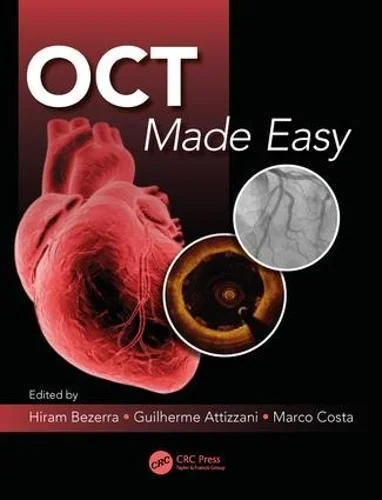
This book, written by premier authors in the field of OCT intravascular imaging, covers the best practices for using OCT to provide high resolution cross-sectional viewing for atherosclerotic plaque assessment, stent strut coverage and apposition, assessment in stent restenosis evaluation, and PCI guide and optimization. Fully illustrated thorughout in a handy, cath-lab side handbook supplemented by online movie clips, OCT Made Easy includes case studies, angiography, CT correlations, and simple techniques for getting the best image.
Table of Contents:
Contributors
Chapter 1 Optical coherence tomography imaging for stent planning
1. 1 Introduction
1. 2 General outline
1. 3 Preintervention OCT imaging
1.
3. 1 Assessment of coronary stenosis severity
1.
3.
1. 1 Basic nomenclature and definitions
1.
3.
1. 2 Considerations of quantitative measurements of vascular structures
1.
3.
1. 3 Estimating the functional significance of coronary stenoses by quantitative OCT measurements
1.
3. 2 Assessment of lesion morphology, composition, and morphometry
1.
3. 3 Vessel measurements for stent sizing
1.
3.
3. 1 Length measurement
1.
3.
3. 2 Diameter measurement
1. 4 Postintervention OCT imaging
1.
4. 1 Verification and optimization of stent expansion
1.
4. 2 Verification and optimization of stent apposition
1.
4. 3 Assessment of other qualitative parameters after stenting
1.
4.
3. 1 Stent edge dissections
1.
4.
3. 2 In-stent dissections, tissue prolapse, and in-stent thrombus
1. 5 Potential clinical impact of OCT use for PCI planning and guidance
References
Chapter 2 OCT imaging for assessment of plaque modification
2. 1 Introduction
2. 2 Plain ordinary balloon and drug-eluting balloon angioplasty
2.
2. 1 Cutting balloon or scoring balloon angioplasty
2.
2. 2 Rotational atherectomy
2.
2. 3 Plaque modification after stenting
References
Chapter 3 OCT for plaque modification
3. 1 Plaque modification before coronary artery stenting using cutting/scoring balloon
3. 2 Cutting and scoring balloons
3. 3 Trial results with cutting or scoring balloon plaque pretreatment
3. 4 Patient’s clinical cases using cutting and scoring plaque pretreatment
3.
4. 1 First clinical case
3.
4. 2 Second clinical case
3.
4. 3 Third clinical case
References
Chapter 4 OCT for stent optimization
4. 1 Introduction
4. 2 Utilization of OCT for vessel preparation
4.
2. 1 Thrombectomy
4.
2. 2 Calcium modification using rotational atherectomy or cutting balloon
4. 3 OCT for defining stent length and diameter
4.
3. 1 Defining lumen profile
4.
3. 2 Screening for unstable plaques
4.
3. 3 Defining the best stent landing zone
4. 4 OCT for side branch protection
4.
4. 1 OCT after stent deployment
4.
4. 2 Stent malapposition
4.
4. 3 Stent underexpansion
4.
4. 4 Edge dissection
4.
4. 5 Incomplete lesion coverage
4.
4. 6 Tissue prolapse
4. 5 Conclusion
References
Chapter 5 OCT for left main assessment
5. 1 Introduction
5. 2 Safety of FD-OCT for ULM Disease
5. 3 FD-OCT Measurements for ULM Disease
5. 4 Feasibility of FD-OCT for ULM Disease
5. 5 Conclusions
References
Chapter 6 Optical coherence tomography for late stent failure
6. 1 Introduction
6. 2 Restenosis
6.
2. 1 Pathobiology of restenosis
6.
2. 2 OCT patterns of restenosis
6.
2. 3 Management
6. 3 Case report: In-stent restenosis
6. 4 Stent thrombosis
6.
4. 1 Prevalence and etiology of stent thrombosis
6.
4. 2 Role of OCT to identify intrastent pathology in late or very late stent thrombosis
6.
4. 3 Can OCT guide therapy in late or very late stent thrombosis?
References
Chapter 7 OCT assessment in spontaneous coronary artery dissection
7. 1 Spontaneous coronary artery dissection
7.
1. 1 Epidemiology
7.
1. 2 Pathogenesis
7.
1. 3 Fibromuscular dysplasia
7.
1. 4 Angiographic features of SCAD: saw angiographic SCAD classification
7.
1. 5 Intracoronary imaging of SCAD
7. 2 Role of OCT in the diagnosis and management of spontaneous coronary artery dissection
7.
2. 1 OCT guidance for PCI
7. 3 Management of SCAD
7. 4 Future directions
7. 5 Conclusions
References
Chapter 8 Optical coherence tomography assessment for cardiac allograft vasculopathy after heart transplantation
8. 1 Introduction
8.
1. 1 Background
8. 2 Screening and diagnosing CAV
8. 3 CAV Pathophysiology
8.
3. 1 Role of rejection
8.
3. 2 Traditional atherosclerosis
8. 4 OCT utilization post–heart transplantation
8.
4. 1 Intimal hyperplasia
8.
4. 2 Atherosclerotic plaques
8.
4. 3 Correlation with cellular rejection
8.
4. 4 Comparison with IVUS
8. 5 Treatment of CAV
8. 6 Conclusion
References
Chapter 9 OCT assessment out of the coronary arteries
9. 1 Introduction
9. 2 History of intravascular imaging
9. 3 Optical coherence tomography
9.
3. 1 Comparison with IVUS
9.
3. 2 Technique
9. 4 Clinical applications of OCT in the peripheral vasculature
9.
4. 1 Diagnostic utilization: lesion characterization
9.
4.
1. 1 Fibrotic and lipid-rich plaques: case 1
9.
4.
1. 2 Calcified plaques: case 2
9.
4.
1. 3 In-stent restenosis: case 3
9.
4.
1. 4 Vein graft: case 4
9.
4.
1. 5 Vasospasm: case 5
9.
4.
1. 6 Thrombus: case 6
9.
4. 2 Assessment of interventional techniques
9.
4.
2. 1 Angioplasty
9.
4.
2. 2 Atherectomy
9.
4.
2. 3 Stent
9. 5 Future directions
References
Chapter 10 Optical coherence tomography for the assessment of bioresorbable vascular scaffolds
10. 1 Introduction
10. 2 Optical coherence tomography assessment before BVS implantation
10. 3 Optical coherence tomography assessment after BVS implantation
10. 4 Optical coherence tomography assessment for BVS follow-up
Disclosures
References
Chapter 11 ILUMIEN OPTIS Mobile and OPTIS Integrated Technology Overview
11. 1 Platform overview
11.
1. 1 FD-OCT operating principles
11.
1. 2 Common system specifications
11.
1. 3 Catheter specifications
11.
1. 4 Comparison to ILUMIEN, C7xr, M3, and M2 specs
11. 2 ILUMIEN OPTIS Mobile System
11.
2. 1 Imaging engine
11.
2. 2 Driver-motor and optical controller
11.
2. 3 Mobile console
11. 3 OPTIS Integrated System
11.
3. 1 Architectural design
11.
3. 2 Control room cabinet
11.
3. 3 DOC holster
11.
3. 4 Remoting cable
11.
3. 5 Tableside controller
11.
3. 6 Installation options (boom vs. table mount)
11. 4 OCT application software
11.
4. 1 B-Mode, L-Mode, and lumen profile displays
11.
4. 2 3D visualization
11.
4. 3 Data management
11. 5 Angio coregistration software
11.
5. 1 Operating principle
11.
5. 2 Guided workflow
11. 6 Conclusion
References
Chapter 12 Terumo OFDI system
12. 1 Introduction
12. 2 Fastview imaging catheter
12.
2. 1 Components and architecture
12.
2. 2 Clinical setup and compatibility
12.
2. 3 Characteristics of FastView
12. 3 Lunawave OFDI imaging console
12.
3. 1 LUNAWAVE imaging technologies
12.
3.
1. 1 Polygon scanner wavelength filter
12.
3.
1. 2 Sensitivity peak shift
12.
3.
1. 3 Laser safety mechanisms
12.
3. 2 Reliability
12.
3.
2. 1 Data protection and backup system
12.
3. 3 Image acquisition setups
12.
3.
3. 1 Pullback condition setting
12.
3.
3. 2 Pullback speed and frame pitch
12.
3.
3. 3 Automatic injector setup: flush rate and volume
12.
3. 4 Stent implantation supporting software
12.
3.
4. 1 Preinterventional diagnosis
12.
3.
4. 2 Area measurement
12.
3.
4. 3 Length measurement
12.
3.
4. 4 Angio coregistration
12.
3. 5 PCI procedure evaluation
12.
3.
5. 1 Distance and thickness measurement
12.
3.
5. 2 Dual-review mode
12.
3. 6 Evaluation of bifurcation lesion: 3D OFDI
12.
3.
6. 1 3D reconstruction
12.
3. 7 File export
12. 4 Case report: Usefulness of OFDI-guided PCI for the separated proximal and mid–left anterior descending artery lesions
12. 5 Case report: Usefulness of 3D OFDI for bifurcation PCI
12.
5. 1 Introduction
12.
5. 2 Case
12.
5. 3 Discussion
Videos
Acknowledgment
Disclosures
References
Chapter 13 OCT imaging acquisition
13. 1 Introduction
13. 2 System of OCT
13. 3 Imaging procedure
13. 4 Flushing parameters: Recommended injection setting
13. 5 Pitfalls and limitations
13.
5. 1 Incorrect calibration
13.
5. 2 Correction with refractive index
13.
5. 3 Filling of catheter sheath with contrast media
13.
5. 4 Inadequate flushing
13.
5. 5 Lesion selection
13. 6 Conclusions
References
Appendix: Intravascular Bioresorbable Vascular Scaffold Optimization Technique
References
Index













Recenzii
Nicio recenzie găsită.