| Description:
For more than 30 years, the highly regarded Secrets Series® has provided students and practitioners in all areas of health care with concise, focused, and engaging resources for quick reference and exam review.
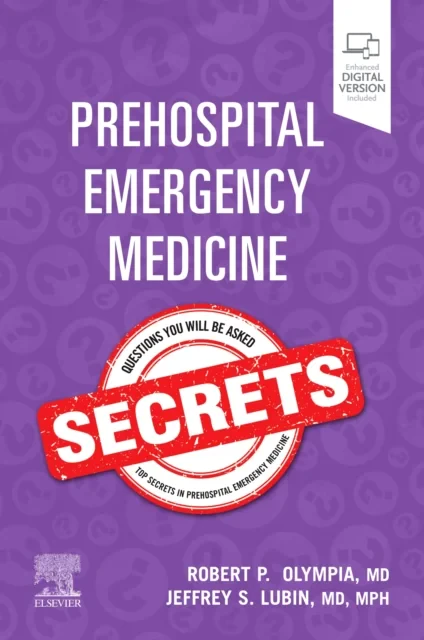
Prehospital Emergency Medicine Care Secrets is an all-new addition to this popular series, offering practical, up-to-date coverage of the full range of essential topics in this dynamic field.
This new resource features the Secrets’ popular question-and-answer format that also includes lists, tables, pearls, memory aids, and an easy-to-read style – making inquiry, reference, and review quick, easy, and enjoyable.
|
| |
| Top 100 Secrets
1 History of Emergency Medical Services
2 Destination Guidelines and Hospital Designation
3 Emergency Vehicle Operation, EMS System Design, and Prehospital Communications
4 Media and Public Relations
5 Medical direction and Medicolegal Issues
6 Public Health and EMS
7 Quality Improvement and Research in EMS
8 Scene safety
9 Critical incident stress and Occupational Health Issues in EMS
10 Prehospital Physical Assessment and Critical Interpretation of Vital Signs
11 Cardiac Arrest, Including ECMO
12 Hypotension and Shock
13 Altered Mental Status
14 Arrhythmias and Electrocardiogram Interpretation
15 Cardiac Emergencies--Chest Pain, STEMI, ACS, CHF
16 Cardiac Device Emergencies
17 Gastrointestinal Emergencies
18 Diabetic Emergencies
19 Sepsis
20 Obstetric and Gynecologic Emergencies
21 Dyspnea
22 Seizures
23 Stroke and Transient Ischemic Attack
24 Syncope
25 General Adult Trauma Principles and Triage
26 Head Injuries and Facial Trauma
27 Cervical Spine and Spinal Cord Injuries
28 Chest, Abdominal, and Pelvic Injuries
29 Extremity Injuries
30 Thermal Burns and Inhalational Injuries
31 Care of the Entrapped Patient, Including Crush Injury
32 Prehospital Physical Assessment and Critical Interpretation of Vital Signs
33 Cardiac Arrest and Arrhythmias
34 Shock
35 Altered Mental Status
36 Chest Pain and Syncope
37 Respiratory Distress Emergencies
38 Seizures
39 Technology Dependent Children
40 General Pediatric Trauma Principles and Triage
40 Technology Dependent Children
41 Head Injuries and Facial Trauma
42 Cervical Spine and Spinal Cord Injuries
43 Chest, Abdominal, and Pelvic Injuries
44 Extremity Injuries
45 Thermal Burns and Inhalational Injuries
46 General Principles in Disasters and Multiple Casualty Incidents
46 General Principles in Disasters and Mass Casualty Incidents
47 Prehospital Triage for Mass Casualties
48 Mass Casualty Evacuation and Patient Movement
49 Biological and Chemical Terrorism
50 Radiation and Radiation Injury
51 Blast Injuries
52 Hazardous Materials Response
53 Tactical Emergency Medical Services
54 Search and Rescue
55 Community Disaster Preparedness
56 General Principles in Wilderness Medicine
56 General Principles in Wilderness Medicine
57 Bites, Stings, and Envenomations
58 Dysbarisms
59 Heat and Cold Related Illness
60 Lightning and Electrical Emergencies
61 Drowning and Submersion Injury
62 Interfacility Transport, Including Ground Critical Care Transport
63 Bariatric Emergencies
64 Geriatric Emergencies
65 Aeromedical Transport
66 Community Paramedicine
67 Intimate Partner Violence, Sexual Assault, and Child Maltreatment
68 End of Life Issues
69 Poisonings and Toxic Exposures
70 Airway Management, Oxygenation and Ventilation
71 Analgesia
72 Care of the Agitated/Suicidal Patient
73 CPR, AED, and Mechanical Compression
74 Field Amputation
75 Hemorrhage Control
76 Intravascular/Interosseous Access and Fluids Resuscitation
77 Perimortem Caesarian Section
78 EMS Point of Care Testing
79 Procedures in the Trauma Patient
80 Telemedicine and Emerging Telecommunications
81 Transport of the Highly Infectious Patient | | |








Recenzii
Nicio recenzie găsită.