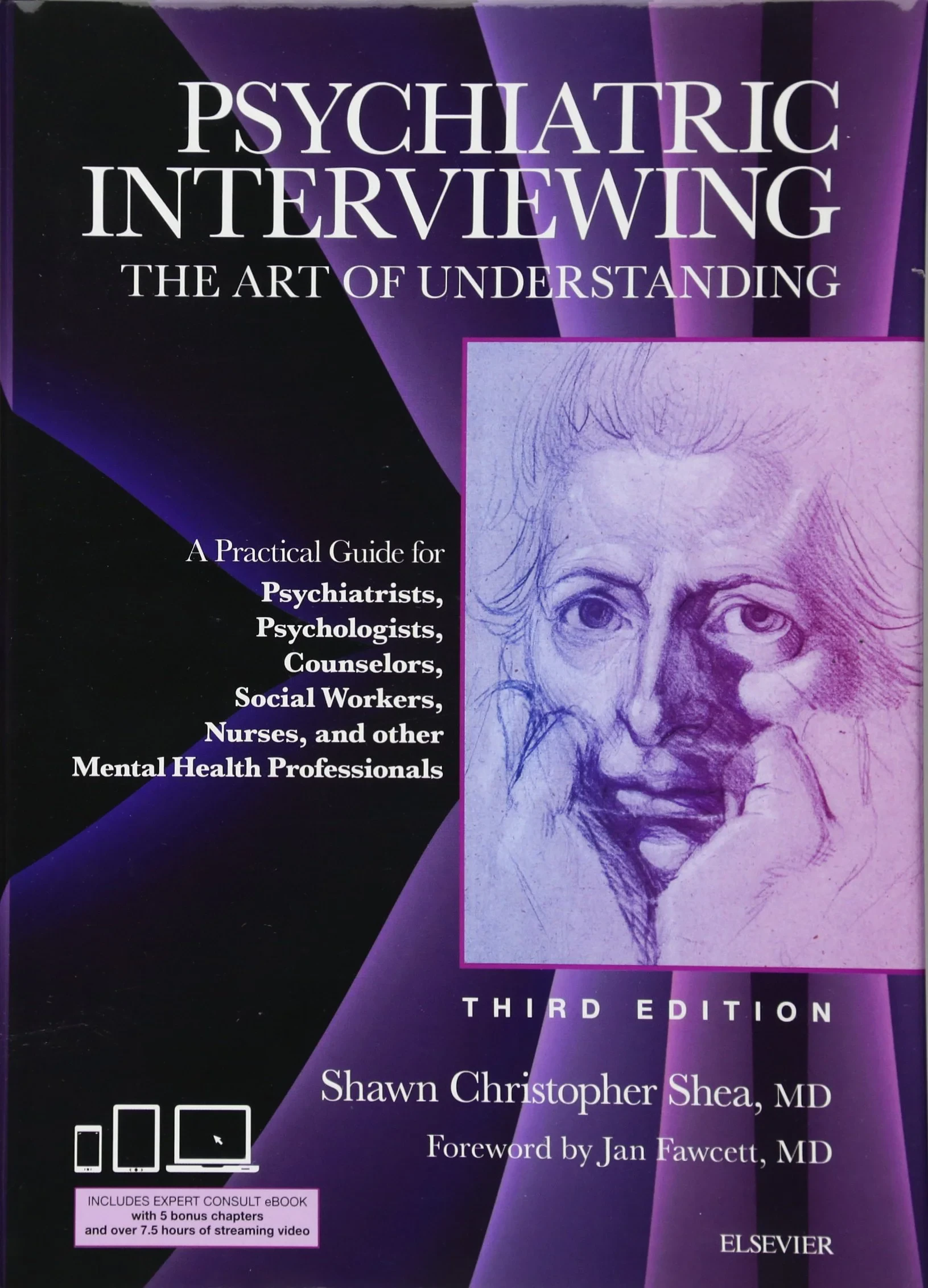
| Part I: Clinical Interviewing: the Principles Behind the Art
1. The Delicate Dance: Engagement and Empathy
2. Beyond Empathy: Cornerstone Concepts and Techniques for Enhancing Engagement
3. The Dynamic Structure of the Interview: Core Tasks, Strategies, and the Continuum of Open-Endedness
4. Facilics: The Art of Transforming Interviews into Conversations
5. Validity Techniques for Exploring Sensitive Material and Uncovering the Truth
6. Understanding the Person Beneath the Diagnosis: the Search for Uniqueness, Wellness, and Cultural Context
7. Assessment Perspectives and the Human Matrix: Bridges to Effective Treatment Planning in the Initial Interview
8. Nonverbal Behavior: The Interview as Mime Part II: The Interview and Psychopathology: from Differential Diagnosis to Understanding
9. Mood Disorders: How to Sensitively Arrive at a DSM-5 Differential Diagnosis
10. Interviewing Techniques for Understanding the Person Beneath the Depression
11. Psychotic Disorders: How to Sensitively Arrive at a DSM-5 Differential Diagnosis
12. Interviewing Techniques For Understanding the Person Beneath the Psychosis
13. Personality Disorders: Before the Interview Begins – Core Concepts
14. "Personality Disorders: How to Sensitively Arrive at a DSM-5 Diagnosis"
15. Understanding and Effectively Engaging People with Difficult Personality Disorders: the Psychodynamic Lens Part III: Mastering Complex Interviewing Tasks Demanded in Everyday Clinical Practice
16. The Mental Status: How to Perform and Document It Effectively
17. Exploring Suicidal Ideation: The Delicate Art of Suicide Assessment
18. Exploring Violent and Homicidal Ideation: From Domestic Violence to Mass Murder Part IV: Specialized Topics & Advanced Interviewing – Bonus Material Online
19. Transforming Anger, Confrontation, and Other Points of Disengagement
20. Culturally Adaptive Interviewing: The Challenging Art of Exploring Culture, Worldview, and Spirituality
21. Vantage Points: Bridges to Psychotherapy
22. Motivational Interviewing (MI): A Foundation Stone in Collaborative Interviewing
23. Medication Interest Model (MIM): Moving from Mere "Adherence" to Genuine Interest and Effective Use Glossary & Appendices App I: Annotated Interview (Full 60-Minute Intake) App II: The Written Document/Electronic Health Record (EHR): Effective Strategies App IIA: Practical Tips for Creating a Good EHR/Write-Up App IIB: Dictation Prompts and Quality Assurance Guidelines for the Written Document App IIC: Sample Written Assessment App IID: Initial Clinical Assessment GL: Glossary of Interview Supervision Terms | 






Recenzii
Nicio recenzie găsită.