Description:
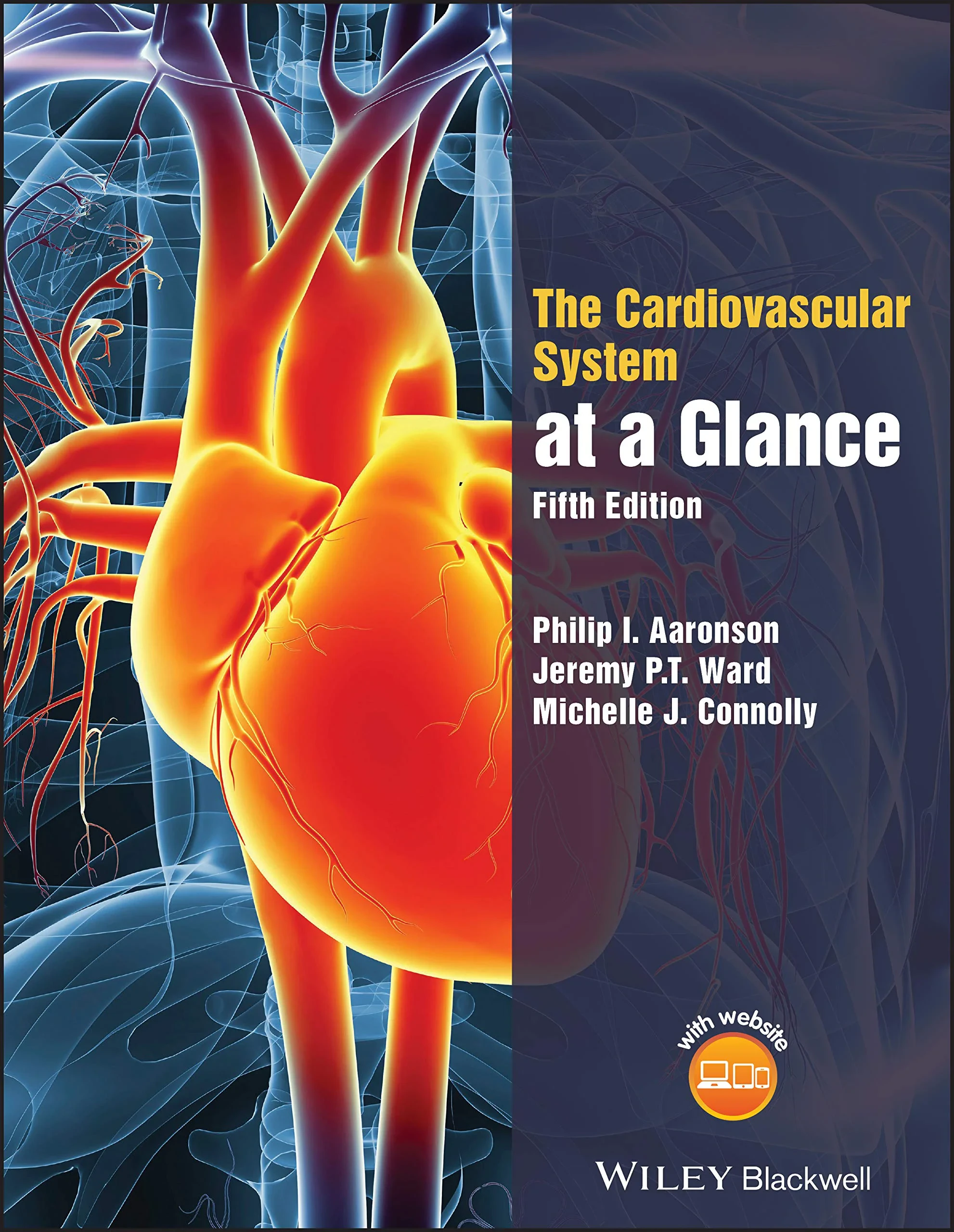
Everything you need to know about the cardiovascular system... at a Glance!
The Cardiovascular System at a Glance is the essential reference guide to understanding all things circulatory. Concise, accessible, and highly illustrated, this latest edition presents an integrated overview of the subject, from the basics through to application. Featuring brand new content on stroke, examination and imaging, heart block and ECGs, and myopathies and channelopathies, The Cardiovascular System at a Glance goes one step further and offers new and updated clinical case studies and multiple-choice questions on a supplementary website.
Integrates basic science and clinical topics
Offers bite-size chapters that make topics easy to digest
Includes coverage of anatomy and histology, blood and haemostasis, cellular physiology, form and function, regulation and integration of cardiovascular function, history, examination and investigations, pathology and therapeutics
Filled with highly visual, colour illustrations that enhance the text and help reinforce learning
Table of Contents:
1 Overview of the cardiovascular system
Blood vessel functions
Anatomy and histology
2 Gross anatomy and histology of the heart
Gross anatomy of the heart (Figure
2. 1)
Structure of the myocardium
Coronary circulation (Figure
2. 6)
3 Vascular anatomy
The systemic circulation
The pulmonary circulation
The splanchnic circulation
The lymphatic system
4 Vascular histology and smooth muscle cell ultrastructure
Exchange vessel structure
Smooth muscle cell ultrastructure
Blood and body fluids
5 Constituents of blood
Plasma
Blood cells
6 Erythropoiesis, haemoglobin and anaemia
Erythropoiesis
Haemoglobin
Anaemia
7 Haemostasis
Primary haemostasis (Figure
7. 1)
Formation of the blood clot (Figures
7. 2,
7. 3)
Inhibitors of haemostasis and fibrinolysis
Defects in haemostasis
8 Thrombosis and anticoagulants
Thrombosis
Antiplatelet drugs (Figure
8. 2)
Anticoagulant drugs (Figure
8. 3)
Some laboratory investigations
9 Blood groups and transfusions
Blood groups
The ABO system
Rh groups
Other blood groups
Complications of blood transfusions
Blood storage
Cellular physiology
10 Membrane potential, ion channels and pumps
Resting membrane potential (Figure
10. 1)
Ion channels and gating (Figure
10. 2)
Ion pumps and exchangers (Figure
10. 3)
Ion pumps and membrane potential
11 Electrophysiology of cardiac muscle and origin of the heartbeat
Ventricular muscle action potential (Figure
11. 1)
Role of Na+–Ca2+ exchange
Sinoatrial node
Other regions of the heart (Figure
11. 2)
12 Cardiac muscle excitation–contraction coupling
Initiation of contraction
Generation of tension
Relaxation mechanisms
Regulation of contractility
Influence of heart rate
13 Electrical conduction system in the heart
Electrical conduction in cardiac muscle (Figure
13. 1)
Conduction pathways in the heart (Figure
13. 2)
Abnormalities of impulse generation or conduction (see also Chapters 48–53)
14 The electrocardiogram
Recording the ECG
General features of the ECG (Figure
14. 2)
Basic interpretation of the ECG (Figure
14. 5)
15 Vascular smooth muscle excitation–contraction coupling
Regulation of contraction by Ca2+ and myosin phosphorylation (see shaded area in left cell of Figure
15. 1)
Vasoconstricting mechanisms
Effects of IP3 and diacylglycerol
Ca2+ influx mechanisms
Ca2+ removal and vasodilator mechanisms (see right cell of Figure
15. 1)
Form and function
16 Cardiac cycle
Atrial systole (A)
Ventricular systole
Ejection
Diastole – relaxation and refilling
The pressure–volume loop
Heart sounds and murmurs
17 Control of cardiac output
Filling pressure and Starling’s law of the heart
Importance of Starling’s law
The autonomic nervous system
Venous return and vascular function curves
18 Haemodynamics
Relationships between pressure, resistance and flow
Blood viscosity
Laminar flow
Wall tension
19 Blood pressure and flow in the arteries and arterioles
Factors controlling arterial blood pressure
Blood pressure and flow in the arteries
Arterioles and vascular resistance
20 The microcirculation and lymphatic system and diapedesis
Organization of the microcirculation
Movement of solutes across the capillary wall
The blood–brain barrier
Diapedesis
The lymphatic system
21 Fluid filtration in the microcirculation
Movement of water across the capillary wall
Water filtration and absorption
Pulmonary and systemic oedema
22 The venous system
Venous and arterial compliance
The veins as capacitance vessels
Effects of posture
The skeletal muscle pump
The respiratory pump
Effect of cardiac contraction
23 Local control of blood flow
Autoregulation
Metabolic and reactive hyperaemia
Metabolic factors
Other local mechanisms
24 Regulation of the vasculature by the endothelium
Nitric oxide
Other endothelium‐derived relaxing mechanisms
Endothelium‐derived constricting factors
Endothelium in cardiovascular disease
25 The pulmonary, skeletal muscle and fetal circulations
The pulmonary circulation
The skeletal muscle circulation
The fetal circulation
Circulatory changes at birth
26 The coronary, cutaneous and cerebral circulations
Coronary circulation
Cutaneous circulation
Cerebral circulation
Integration and regulation
27 Cardiovascular reflexes
Intrinsic cardiovascular reflexes
Central regulation of cardiovascular reflexes
28 Autonomic control of the cardiovascular system
The sympathetic system
Effects on the heart
Effects on the vasculature
The parasympathetic system
Effects on the heart
Effects on the vasculature
29 The control of blood volume
Role of sodium and osmoregulation
Control of Na+ and blood volume by the kidneys
Antidiuretic hormone in volume regulation
30 Cardiovascular effects of exercise
Effects of exercise on plasma volume
Regulation and coordination of the cardiovascular adaptation to exercise
Systemic effects mediated by autonomic reflexes
Effects of local metabolites on muscle and heart
Effects of training
31 Shock and haemorrhage
Haemorrhagic shock
Immediate compensation
Medium‐ and long‐term mechanisms
Complications and irreversible (refractory) shock
Other types of hypovolaemic shock
Low‐resistance shock
History, examination and investigations
32 History and examination of the cardiovascular system
History
Examination
33 Cardiac imaging
Pathology and therapeutics
34 Risk factors for cardiovascular disease
Modifiable risk factors
Fixed risk factors
Risk scoring in clinical practice
35 β‐blockers, angiotensin‐converting enzyme inhibitors, angiotensin receptor blockers and Ca2+ channel blockers
β‐adrenoceptor antagonists (β‐blockers)
Angiotensin‐converting enzyme inhibitors and angiotensin 2 receptor blockers
Ca2+ channel blockers
36 Hyperlipidaemias
Lipoproteins and lipid transport
Hyperlipidaemias: types and treatments
37 Atherosclerosis
Pathogenesis of atherosclerosis
Oxidized low‐density lipoprotein, macrophages and atherogenesis
Clinical consequences of advanced atherosclerosis
38 Mechanisms of primary hypertension
Vascular remodelling
Secondary hypertension
39 Treatment of hypertension
Definition and implications of hypertension
Diagnosis and general management of hypertension
Drugs used to treat hypertension
Renal effects of vasodilators
40 Stable, microvascular, and vasospastic angina
Stable angina (Figure
40. 2)
Microvascular angina (Figure
40. 3)
Vasospastic angina (Figure
40. 4)
41 Pharmacological management of stable, microvascular and vasospastic angina
Antianginal agents
β‐Adrenergic receptor blockers (see also Chapter 35)
Ca2+‐channel blockers (see also Chapter 35)
Nitrovasodilators
Other antianginals
Management of microvascular angina
Management of vasospastic angina
Drugs for secondary prevention of cardiovascular disease
42 Non‐ST segment elevation acute coronary syndromes (NSTE‐ACS)
Pathophysiology of NSTE‐ACS
Management of NSTE‐ACS (Figure
42. 3)
43 Coronary revascularisation
Percutaneous coronary intervention (Figure
43. 1)
The role of PCI in stable coronary artery disease
Coronary artery bypass grafting (CABG) (Figure
43. 2)
PCI vs CABG in stable coronary artery disease
44 Pathophysiology of acute myocardial infarction
Role of thrombosis in MI
Mechanisms and consequences of plaque rupture (Figure
44. 1)
Evolution of the infarct (Figure
44. 1)
45 ST segment elevation myocardial infarction (STEMI)
Symptoms and signs (Figure
45. 1)
Investigations
Immediate management (Figure
45. 1)
Subsequent management (Figure
45. 1)
Complications of acute myocardial infarction
46 Heart failure
Types of heart failure
Pathophysiology
Consequences of compensation (Figure
46. 3)
Myocardial dysfunction and remodelling
47 Treatment of chronic heart failure
ACEI and other vasodilators
β‐receptor blockers
Aldosterone antagonists
Diuretics
Cardiac glycosides
Device therapy in CHF
48 Mechanisms of tachyarrhythmia
Disorders of impulse generation: latent pacemakers and triggered automaticity
Abnormal impulse conduction: re‐entry
The sympathetic nervous system and arrhythmias
49 Atrial fibrillation
Classification of atrial fibrillation
The ventricular rate in atrial fibrillation
Atrial fibrillation and stroke
Management of atrial fibrillation
50 Other supraventricular arrhythmias
51 Ventricular tachyarrhythmias and their non‐pharmacological management
Ventricular rhythm disturbances
52 Pharmacological treatment of tachyarrhythmias
Class I drugs (Figure
52.
1. 1)
Class II drugs (Figure
52.
1. 2)
Class III drugs (Figure
52.
1. 3)
Class IV drugs, adenosine and digoxin (Figure
52.
1. 4)
53 Conduction system abnormalities and pacing
Atrioventricular block
Bundle branch block
Pacing systems
54 Diseases of the aortic valve
Aortic stenosis
Aortic regurgitation
55 Diseases of the mitral valve
Mitral stenosis (Figure
55. 1)
Mitral regurgitation (Figure
55. 2)
56 Congenital heart disease
57 Cardiomyopathies and channelopathies
Cardiomyopathies (Figure
57. 1)
Channelopathies
58 Pulmonary hypertension
Types of pulmonary hypertension
Pulmonary arterial hypertension
Pathophysiology
Clinical findings and diagnosis
Management
59 Stroke
Stroke signs, symptoms and risk factors
Pathogenesis
Investigations
Acute management
Haemorrhagic stroke
Long‐term management, rehabilitation and secondary prevention
Index
End User License Agreement










Recenzii
Nicio recenzie găsită.