| Description:
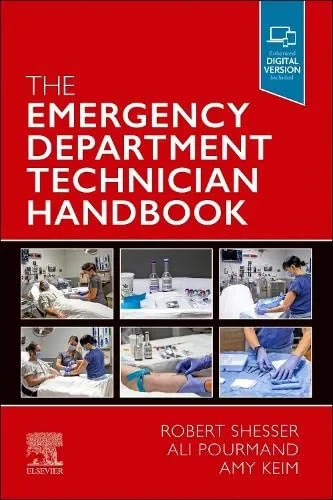
Emergency Department Technicians (EDTs) play a vital role in actively supporting the medical team in today’s hospitals, and the role continues to expand in light of staffing shortages and increased emergency department volumes.
The Emergency Department Technician Handbook is a reliable, comprehensive resource in this increasingly important field, filling a timely need in EDT workforce development for both technicians and educators.
Concise, readable text, along with high-quality clinical photos and a video library that depict procedures and patient positioning, make this new handbook a must-have resource in every emergency department.
| |
Features:
| - Provides quick, convenient access to practical guidance and everyday answers in an easy-to-read outline format.
- Discusses key topics such as patient flow and assessment in the ED, triage, and point-of-care testing.
- Advises on best practices for wound care, including cleansing, dressing, and splinting a wound as well as how to set up a suture tray and advanced wound care techniques.
- Covers essential imaging-based procedures, including the use of ultrasound-guided IV.
- Features a companion video library with a range of clips depicting how to perform procedures and patient examinations in real time.
- Enhanced digital version included with purchase.
Your enhanced digital allows you to access all of the text, figures, videos, and references from the book on a variety of devices.
| | Table Of Contents:
| | 1 The Role of the Hospital Emergency Department and the Specialty of Emergency Medicine
2 Emergency Department Organization and Flow
3 Medical Terminology
4 Teamwork and Communication
5 Initial Emergency Department Patient Assessment
6 Triage
7 Point-of-Care Testing
8 The Electrocardiogram and Cardiac Monitoring
9 Cardiologic Emergencies
10 Respiratory System Emergencies
11 Abdominal and Genitourinary Problems
12 Endocrinologic Emergencies
13 Ear, Nose, and Throat and Ophthalmologic Emergencies
14 Stroke and Neurologic Emergencies
15 Vascular Access
16 Ultrasound-Guided IV Access
17 Wound Management
18 Musculoskeletal Injuries
19 Orthopedic Immobilization Techniques
20 The Major Trauma Patient
21 Behavioral Health and Toxicologic Emergencies
22 Medical Ethics, the Law, and Cultural Competency
23 Patient Transport
24 Pediatrics
25 Documentation
26 Disasters and Mass Casualty Events
27 Infection Control in the Emergency Department
28 Case Studies in Emergency Triage
29 Obstetrics and Gynecology in the Emergency Department
GLOSSARY
INDEX | | | |









Recenzii
Nicio recenzie găsită.