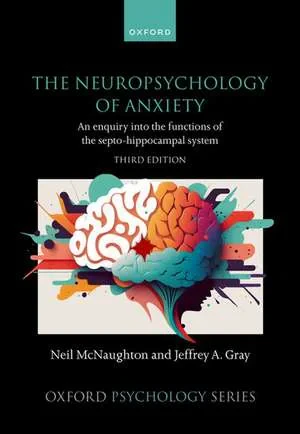
Provides a comprehensive integration of theories of anxiety and memory centred on hippocampal function
Presents a unique view of memory control and of memory dysfunction as being catastrophic hypermnesia
Offers an integrated, coherent, 2-dimensional view of systems controlling attraction, repulsion, and their conflict
Explores the basis for development of biomarker-based syndromal diagnosis and novel fast-acting treatments of the neurotic disorders
New to this Edition:
Completely updated and revised third edition provides a further updated theory of septo hippocampal function combined with an improved understanding of anxiety
Offers an updated neuropsychological basis for the Reinforcement Sensitivity Theory of personality
Includes a new chapter on prefrontal cortex integrating frontal and hippocampal views of anxiety, as well as an extensively modified chapter on personality providing a new basis for further developments of Reinforcement Sensitivity Theory
Numerous figures have been fully updated and converted to colour to support the text.
Description
The Neuropsychology of Anxiety first appeared in 1982 as the first volume in the Oxford Psychology Series, and it quickly established itself as a classic work in the psychology and neuroscience literature.
It presented an innovative, and at times controversial, theory of anxiety and the brain systems, especially the septo-hippocampal system, that subserve it.
This completely updated and revised third edition provides a further updated theory of septo hippocampal function combined with an improved understanding of anxiety.
The book includes a new chapter on prefrontal cortex integrating frontal and hippocampal views of anxiety, as well as an extensively modified chapter on personality providing a new basis for further developments of Reinforcement Sensitivity Theory.
In addition, numerous figures have been fully updated and converted to colour to support the text.
This book is essential for postgraduate students and researchers in experimental psychology and neuroscience, as well as for all clinical psychologists and psychiatrists.















Recenzii
Nicio recenzie găsită.