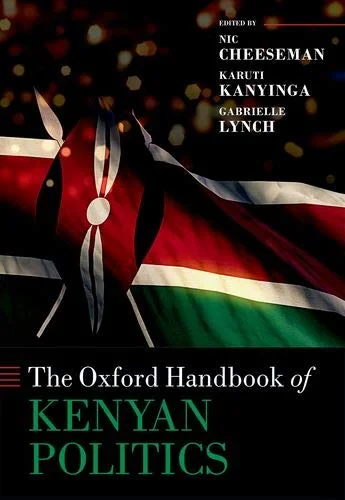
The Oxford Handbook of Kenyan Politics provides a comprehensive and comparative overview of the Kenyan political system as well as an insightful account of Kenyan history from 1930 to the present day.
Introduction; 1 Nic Cheeseman, Karuti Kanyinga, and Gabrielle Lynch: The political economy of Kenya: Community, clientelism, and class; Part I - The struggle for democracy; 2 Derek R.
Peterson: Colonial rule and the rise of African politics (1930-1964); 3 David W.
Throup: Jomo Kenyatta and the creation of the Kenyan state (1963-1978; 4 David W.
Throup: Daniel arap Moi and one-party rule (1978-1991); 5 Raymond Muhula: The limits of multipartyism (1992-2005); 6 James D.
Long: Civil conflict, power sharing, truth and reconciliation (2005-2013); 7 Collins Odote: The 2013 elections and the peace narrative (2013-2015); 8 Marie-Emmanuelle Pommerolle: The 2017 elections and electoral (in)justice (2015-2017); Part II - Identity politics; 9 John Lonsdale: Race and ethnicity in colonial Kenya; 10 Gregory Deacon: The political role of Christian churches; 11 Ngala Chome: The political role of Islam; 12 Winnie Mitullah: Gender mainstreaming and the campaign for equality; 13 Naomi van Stapele: Youth and masculinity; 14 Sini Hassinen: Sexual minority rights and activism; Part III - Political institutions; 15 Yash Ghai: Constitutions and constitutionalism; 16 Walter O.
Oyugi and Jimmy O.
Ochieng: The politics of the Provincial Administration; 17 Ken Opalo: The rise and fall of the legislature; 18 Michelle D'Arcy: Devolution and county government; Part IV - Civil society, the media and political culture; 19 Angelique Haugerud, Meghan Ference, and Dillon J.
Mahoney: Satire, social media, and cultures of resistance; 20 Denis Galava: The role of traditional media; 21 Michelle Osborn: Chiefs, elders, and traditional authority; 22 Geoffrey Lugano: Civil society and the state; 23 Thomas P.
Wolf: The science, suspicion and sustainability of opinion polls; Part V - Political parties and strategies of mobilisation; 24 Susanne D.
Mueller: High stakes ethnic politics; 25 Adams Oloo: The weaknesses of political parties; 26 Sarah Jenkins: Violence as an election strategy; Part VI - Law and (dis)order; 27 Irina Ichim: The protection and promotion of human rights; 28 Ambreena Manji: Land rights and the rule of law; 29 Musambayi Katumanga: Post-colonial state-military relations; 30 Abduallahi Boru Halakhe: Police, reform, and counter-terrorism; 31 Jacob Rasmussen: Gangs and vigilantism; Part VII - The political economy of development; 32 John W.
Harbeson and Frank Holmquist: The lessons and legacies of the Kenya debate''; 33 Radha Upadhyaya and Edoardo Totolo: The financial sector; 34 Mai Hassan: The local politics of resource distribution; 35 Bitange Ndemo and Dennis Aiko: Mobile technology and development; 36 Jennifer N.
Brass: NGOs and public service provision; 37 Jane N.
O.
Khayesi: The informal economy and its relationship with the state; Part VIII - Kenya and the world; 38 Michael Chege: The political economy of foreign aid to Kenya; 39 Njoki Wamai: International relations and the International Criminal Court; 40 David M.
Anderson: Kenya's war in Somalia; 41 L.
Muthoni Wanyeki: Foreign policy and regional relations; 42 Samuel M.
Makinda: The rise of China in Kenya's foreign relations; Part IX - Regional politics in the time of devolution; 43 Patrick O.
Asingo: Nyanza: The Odinga dynasty and beyond; 44 Peris S.
Jones: Nairobi: The politics of the capital; 45 Alex Dyzenhaus: Rift Valley: The struggle for supremacy; 46 Hassan H.
Kochore: North Eastern: From the periphery to the center; 47 Dominic Burbidge and Thomas Raji: Central: Self-sufficiency in a local arena; 48 Frederick O.
Wanyama: Western: Negotiating political heterogeneity; 49 Mumo Nzau: Eastern: The dynamics of bridesmaid politics; 50 Hannah Waddilove: The Coast: An elusive political bloc














Recenzii
Nicio recenzie găsită.