Description:
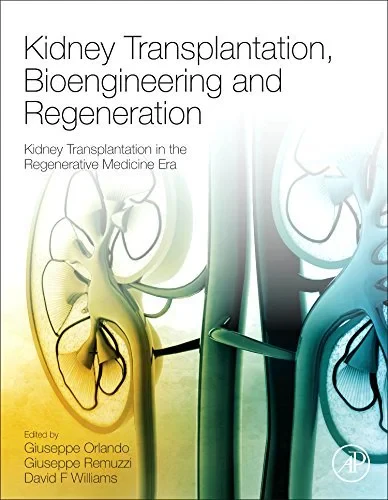
Kidney Transplantation, Bioengineering, and Regeneration: Kidney Transplantation in the Regenerative Medicine Era investigates how the field of regenerative medicine is changing the traditional premises of solid organ transplantation, specifically within the field of kidney transplantation. In Section 1, chapters illustrate the state of the art in kidney transplantation as well as the research behind the bioengineering and regeneration of kidney organoids for therapeutic renal replacement.
In Section II, chapters catalog the technologies that are being developed and the methods that are being implemented to bioengineer or regenerate kidneys in order to restore function, while critically highlighting those technological advances which hold the most promise. The book thus encompasses clinical renal transplantation, tissue engineering, biomaterial sciences, stem cell biology, and developmental biology, as they are all applied to the kidney.
- Focuses on the synergy between renal organ transplantation and regenerative medicine, highlighting the advances within transplantation, bioengineering, regeneration, and repair
- Educates the transplant community on important regenerative medicine research pertinent to kidney transplantation
- Develops a shared language for clinicians, surgeons, and basic researchers to reach across the fields of transplantation and regenerative medicine, and facilitate more productive investigation and research
- Catalogs the technologies being developed and methods being implemented to bioengineer or regenerate kidneys to restore function
· Introduction
· Part I: Kidney Transplantation
· Section I: Epidemiology of Kidney Disease and Transplantation
· Chapter
1. Epidemiology of End-Stage Renal Failure: The Burden of Kidney Diseases to Global Health
· Chapter
2. Transplant Programs Worldwide and the Spanish Miracle
· Section II: Donor Selection and Allocation
· Chapter
3. The Deceased Kidney Donor
· Chapter
4. The Living Donor
· Chapter
5. Criteria for Kidney Allocation in the United States
· Chapter
6. Strategies to Increase the Donor Pool
· Section III: Kidney Preservation and Transplant Procedures
· Chapter
7. Kidney Preservation
· Chapter
8. Ex-vivo Normothermic Perfusion in Renal Transplantation
· Chapter
9. Kidney Transplant Recipient Surgery
· Chapter
10. Robotic-Assisted Kidney Transplantation
· Chapter
11. Orthotopic Kidney Transplantation
· Chapter
12. Kidney Transplantation Combined With Other Organs
· Chapter
13. Pediatric Renal Transplantation
· Section IV: Kidney Recipient: Before and Peritransplant
· Chapter
14. Indications for Renal Transplantation: Evaluation of Transplant Candidates
· Abstract
· Chapter
15. Early Postoperative ICU Care of the Kidney Transplant Recipient
· Chapter
16. Approaches to Minimize Delayed Graft Function in Renal Transplantation
· Section V: Transplantation Immunology and Immunomodulation
· Chapter
17. Histocompatibility Testing in the Transplant Setting
· Chapter
18. The Immune Response to the Allograft
· Chapter
19. Induction Immunosuppression in Kidney Transplantation
· Chapter
20. Maintenance Immunosuppression in Kidney Transplantation
· Chapter
21. Novel Drugs in Kidney Transplantation
· Chapter
22. Hematopoietic Stem Cell Transplantation for Induction of Allograft Tolerance
· Chapter
23. Regulatory T Cell Therapy in Transplantation
· Chapter
24. Mesenchymal Stromal Cells to Improve Solid Organ Transplant Outcome:
· Chapter
25. Renal Transplantation Across HLA and ABO Barriers
· Section VI: Graft Monitoring Tools
· Chapter
26. Pathology of the Renal Allograft
· Chapter
27. Imaging-Based Monitoring of the Renal Graft
· Chapter
28. Immune Monitoring in Kidney Transplantation
· Chapter
29. Renal Function Measurements
· Chapter
30. Pharmacokinetics and Genomics of Immunosuppressive Drugs
· Chapter
31. Gene Expression Technology Applied to Kidney Transplantation
· Section VII: Early Posttransplant Immune Events
· Chapter
32. Acute Cellular Rejection
· Chapter
33. Acute Antibody-Mediated Rejection
· Section VIII: Early and Late Complications
· Chapter
34. Vascular Complications in Renal Transplantation
· Chapter
35. Infections in Kidney Transplant Recipients
· Chapter
36. Metabolic Disorders Following Kidney Transplantation
· Chapter
37. Cancer After Kidney Transplantation
· Chapter
38. Cardiovascular Disease and Renal Transplantation
· Chapter
39. Graft and Patient Survival
· Chapter
40. Urological Complications of the Renal Graft
· Chapter
41. Impact of De Novo Donor-specific Alloantibody in Primary Renal Allografts
· Chapter
42. De Novo and Recurrence of Renal Disease
· Section X: Transplant Issues in Specific Patient Groups
· Chapter
43. Kidney Transplantation in the Elderly
· Chapter
44. Dual Kidney Transplantation
· Chapter
45. Kidney Transplantation in the Diabetic Patient
· Chapter
46. Kidney Transplantation in the Hepatitis C Infected Recipient
· Chapter
47. Pregnancy After Kidney Transplantation
· Chapter
48. Nutrition of the Kidney Transplant Recipients
· Section XI: Ethics and Costs
· Chapter
49. Kidney Transplantation in Developing Countries
· Chapter
50. Health-Related Quality of Life Outcomes After Kidney Transplantation
· Chapter
51. Costs of Kidney Transplantation
· Section XII: Unmet Needs
· Chapter
52. Kidney Transplantation: Have the Promises Been Kept and Needs Met
· Chapter
53. Innovations in Kidney Transplant Research
· Part II: Kidney Bioengineering and Regeneration
· Section I: Introduction
· Chapter
54. Converging Organ Transplantation Towards Regenerative Medicine
· Chapter
55. A Systems Engineering Approach to Restoring Kidney Structure and Function
· Abstract
· Section II: Kidney Development
· Chapter
56. Kidney Development in the Mammal
· Chapter
57. Renal Branching Morphogenesis
· Section III: Bioengineering
· Chapter
58. Principles of Stem Cell Biology Applied to the Kidney
· Chapter
59. Extracellular Matrix Biology Applied to the Kidney
· Chapter
60. Interplay Between Growth Factor Receptors, Small GTPases, and Mechanical Stress in the Maintenance of Kidney Glomerular Homeostasis
· Chapter
61. Bioengineering Approach to Immunomodulation
· Chapter
62. Principles of Organ Bioengineering
· Chapter
63. Recellularization of Kidney Scaffold With Stem Cells
· Section IV: Bioreactors and Biomaterials
· Chapter
64. Bioreactors for Cell Culture Systems and Organ Bioengineering
· Chapter
65. Synthetic Biomaterial for Regenerative Medicine Applications
· Chapter
66. Immune Responses to Biomaterials Used in Renal Engineering
· Section V: Regeneration
· Chapter
67. Regeneration of Kidney From Human Reprogrammed Stem Cells
· Chapter
68. Bioprinting Complex 3D Tissue and Organs
· Chapter
69. Principles of Kidney Regeneration
· Chapter
70. Markers of Repair and Regeneration in the Marginal Kidney
· Chapter
71. Nephron Repair in Mammals and Fish
· Chapter
72. Imaging of Glomerular Regeneration
· Chapter
73. Reversibility of Renal Fibrosis
· Chapter
74. Pharmacological Induction of Kidney Regeneration
· Chapter
75. Developmental Approaches to Kidney Regeneration
· Section VI: Adult Cells for Regeneration
· Chapter
76. Nephron Progenitors
· Chapter
77. Urine Progenitor Cells for Potential Application in Renal Tissue Repair
· Chapter
78. Endothelial Progenitor Cells in Kidney Disease
· Section VII: Cell Therapy For Renal Tissue Repair
· Chapter
79. Mesenchymal Stromal Cells for Acute Renal Injury
· Chapter
80. Amniotic Fluid Cells: Kidney Injury and Regeneration
· Chapter
81. Renal Cells From Spermatogonial Germline Stem Cells for Protection Against Kidney Injury
· Chapter
82. Kidney-on-a-Chip: Technologies for Studying Pharmacological and Therapeutic Approaches to Kidney Repair
· Chapter
83. Renal Replacement Devices
· Chapter
84. Xenotransplantation and Kidney Regenerative Technology
· Chapter
85. Embryonic Organoid Transplantation
· Chapter
86. Lineage Reprogramming Toward Kidney Regeneration
· Chapter
87. Regenerating Kidney Structure and Function: An Industry Perspective














Recenzii
Nicio recenzie găsită.